Contents
Chapter 1
- 1.1 Introduction
Chapter 2
- 2.1 Aim & Objective
- 2.2 Design & Production
- 2.2.1 Project Ideation
- 2.2.2 Pre-research Phase
- 2.2.3 Inspiration & Significance
- 2.2.4 First Production Phase
- 2.2.5 Second Production Phase
- 2.2.6 Third Production Phase
- 2.2.7 Commissions
- 2.3 Sales & Marketing Strategies
- 2.4 Analysis
- 2.4.1 Finance
- 2.4.2 Post-Research Phase
- 2.4.3 Challenges
- 2.4.4 SWOT Analysis for Panhtwar Burma
Chapter 3
- 3.1 Conclusion
- 3.2 Recommendations
Chapter 1
1.1 Introduction
In a world where traditional cultures are on the verge of fading away due to the upheaval of modernity, this project seeks to preserve Burmese heritage by combining contemporary aesthetics with traditional elements. As globalization and urbanization reshape identities, it becomes increasingly vital to connect Myanmar’s youth with their rich cultural roots. The inspiration for this project lies in reconnecting the past with the future, specifically by bridging Myanmar’s youth with their cultural roots while providing them with something fresh and stylish.
Ancient motifs and symbols are explored, reimagined, and reanimated through this lens, aiming to bring forth the beauty and significance of Burmese culture. By focusing on the aesthetic dimension of these artifacts, we hope to inspire a renewed appreciation among the youth. While our design philosophy is deeply inspired by ancient Burmese motifs, we also acknowledge the importance of staying relevant in today’s fashion world. T-shirt design continues to evolve, and in 2024, modern trends are focused on minimalism, bold self-expression, and sustainability. These themes, while contemporary, can still be harmoniously integrated with our cultural motifs.
For example, the minimalist typography trend aligns well with traditional Burmese script. We can use this style to highlight powerful quotes or ancient texts, blending heritage with modern minimalism. Similarly, retro and vintage aesthetics could be adapted to feature nostalgic references to old Burmese art forms, patterns, or folklore, using colors and textures that resonate with both retro sensibilities and cultural authenticity.
When it comes to abstract art, there is immense potential to reinterpret traditional Burmese symbols, such as the lotus or the peacock, in abstract form. These reinterpretations allow for artistic freedom while still grounding the designs in cultural significance.
Experience teaches. As we are young, our thoughts are often bold and far-reaching, yet they are shaped and refined by real-world experience. We approach this project with a blend of creativity and practicality—part inspiration, part business. Our aim is to push our creative endeavors while remaining mindful of the constraints shaped by life’s realities.
Chapter 2
2.1 Aim and Objective
The following procedures are the aims and objectives for this project:
- To preserve and uphold Myanmar’s culture
- To integrate modern trends and traditional culture into fashion design
- To reevaluate the traditions and culture of Myanmar
- To make Myanmar’s culture apparent in the ever-expanding landscape of globalization
- To gain experience in T-shirt printing and business development
2.2 Design and Production
2.2.1 Project Ideation
Our team discussed and brainstormed this project which took us 3 hours and we came up with 3 ideas; we thought of selling ice cream at first; secondly, we wanted to sell T‑shirts, and our final idea was to recycle plastic into new products and sell them. As our target audiences are primarily teenagers, we thought about what teenagers are mostly into and what activities they enjoy doing. Therefore, we decided to undertake T-shirt printing and cultural logo‑creating services. Subsequently, we tried to come up with what sort of designs we would be producing. For our designs, we considered Myanmar culture and tradition as the main concept or theme. With Myanmar culture gradually declining, we have taken it upon ourselves to reignite interest in Myanmar culture and make it the core sentiment among our Myanmar teenagers once again.
We decided to primarily use cotton as our main material. We specifically chose cotton for its lightweight properties and exceptional comfort. Also, to ensure that the quality does not degrade even with daily wear. As for the designs, we incorporated elements that reflect Myanmar tradition, such as lacquerware, Phoe Wa Yoke, Owl Toy, Pathein Umbrella, and others. Through creativity and careful consideration, we created designs that could draw the attention of Myanmar teenagers.
2.2.2 Pre-research Phase
To officially launch our business, we conducted both primary and secondary research. For the secondary research, we explored online resources related to Myanmar culture, such as Phoe Wa Yoke, Pathein Umbrella, Tanaka, Owl Toy, lacquerware, puppets, and Shwe Son Nyo. Based on these inspirations, we came up with 7 designs. The objective of the primary research was to determine which of our 7 designs people find most appealing. To achieve this, we conducted 2 surveys: a pre‑survey and a post‑survey. In the pre‑survey, we presented the earlier designs for the participants to review, while the post‑survey gathered feedback and suggestions from customers who had purchased our T‑shirts.
Data for the pre‑survey was collected from our peers at International Leadership University, with a total of 44 respondents. We applied snowball sampling method to gather as many participants as possible. We used a questionnaire consisting solely of quantitative questions type which included 3 Closed questions.
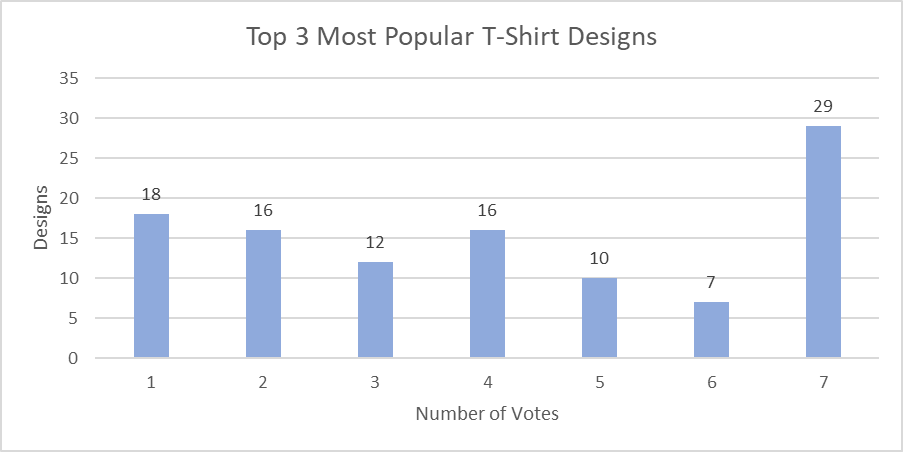
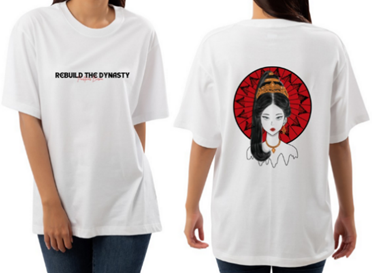
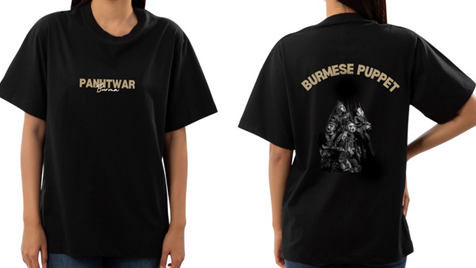
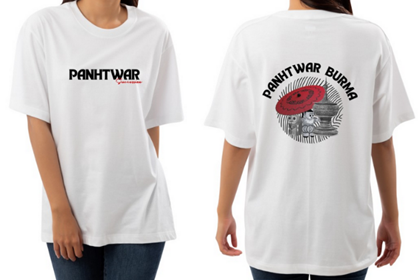
According to the results in Figure (2.1), 29 participants preferred design 7; Figure (2.2), showed a stronger interest in this design compared to other ones. Meanwhile, 18 participants were interested in design 1, Figure (2.3), and 16 favored design 4, Figure (2.4), making these the top 3 designs that the participants were most interested in. Of the participants, 16 expressed interest in design 2, 12 in design 3, and 10 in design 5. Additionally, the remaining 7 participants indicated the least interest in design 6.
2.2.3 Inspiration & Significance
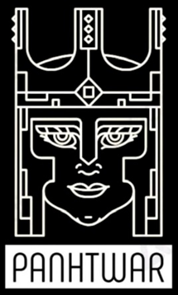
Our brand name, “PANHTWAR Burma,” is taken inspiration from one of Myanmar’s ancient queens, Queen Panhtwar, who is known for her beauty, courage, wisdom, and representation of the strength and grace of Myanmar’s cultural heritage. We aim to reflect not only the bravery and beauty of Queen Panhtwar but also the resilience and elegance of Burmese culture.
The name ”PANHTWAR” holds historical significance, symbolizing a connection to our roots, while “Burma” connects the name to the international perception of our country. This combination reflects our motive to blend Myanmar’s traditional attire with contemporary global fashion, creating a unique fusion that can be appreciated both locally and internationally.
The logo, Figure (2.5), embraces modern design aesthetics, creating a clean and minimalistic look that speaks to today’s fashion‑conscious youth. We chose a simple and elegant style to make the logo recognizable and iconic while ensuring it remains adaptable across different mediums, like T‑shirts and promotional materials.
2.2.4 First Production Phase
At first, we planned to purchase blank T‑shirts and then print our designs on them. However, during this production, we were doing a commission for the Youth Day program, designing T‑shirts, bags, pens, and notebooks. This led us to postpone our original T‑shirt production. After completing the first project, we revised our plan and purchased pre‑printed T‑shirts instead. We explored both physical and online stores before finding a suitable business for our needs, ‘Cowboy Printing Service’, based in Yangon.
When placing the order, we produced 9 T‑shirts in XL size, with three pieces of each design, including packaging. The order took 10 days to arrive, though there was a minor issue with delivering to the wrong location. Fortunately, we quickly resolved the issue and successfully began selling the products.
2.2.5 Second Production Phase
Due to some errors in our initial batch of products, we decided to modify our ordering process. After researching various services, we selected ‘The Ink T‑shirt Printing Service’ as the most suitable option. We contacted the service and requested a sample T‑shirt. The quality of the printed design on the sample was excellent, particularly the sticker, which met our expectations. Based on this, we decided to place an order for six T‑shirts: four in XL size and two in 2XL size. The T‑shirts are made from 100% cotton. The order took one week to arrive as the service is located in Yangon. Upon receiving the six T‑shirts, we immediately fulfilled our pre‑orders.
2.2.6 Third Production Phase
Following the successful sale of our second batch, we implemented a pre‑ordering system and received two additional orders for T‑shirts: one in size L and another in size M.
2.2.7 Commissions
While we were working on our original project, a great opportunity was presented as the Rector of International Leadership University, Dr. Richard Dare, approached us to help with an exciting new task. They commissioned us to design T‑shirts, pens, bags, and books for International Youth Forum Day.
Our responsibility was focused entirely on the design side of things, while the school took care of all the operational tasks, like production and organizing the event. This made it clear what each of us needed to do.
On July 11, 2024, we had our first meeting to present the initial design to Dr. Richard Dare. Unfortunately, our design didn’t meet all the expectations. He gave us some feedback and pointed out areas we could improve. Instead of being discouraged, we saw it as a chance to learn and make our designs even better.
Taking the feedback into account, we worked on a second version of the design. After some group discussions, we came up with something we believed matched the event’s spirit much more closely. On July 21, 2024, we presented the new designs, which we got the approval of Dr. Richard Dare, and we were pleased with the outcome.
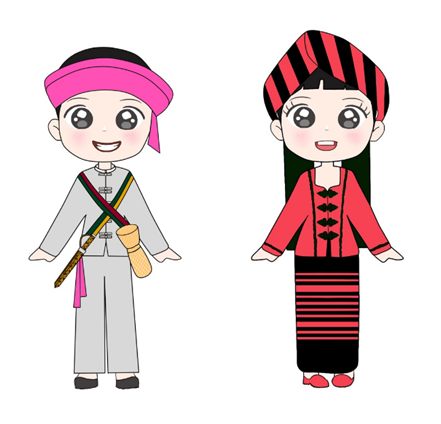
In September, PANHTWAR Burma acquired a new client for a customized mascot design. The client’s business specializes in producing dry green leaves and raw coffee powder. As part of the project, we were tasked with creating two mascots: a boy and a girl, both representing the Danu nationality of Myanmar. The goal was to capture the essence of the Danu culture while aligning with the client’s business identity.
Starting from the sketching phase, we carefully researched the traditional clothing, physical features, and cultural elements of the Danu people to ensure that the mascots would be both authentic and appealing to the target audience. Our attention to detail was crucial in crafting mascots that accurately reflected the Danu heritage.
Once both mascots were fully developed in sketch form, then these static sketches were transformed into vibrant, animated characters that brought the mascots to life, giving them the personality and charm that the client envisioned.
Throughout the production process, communication with the client was key to ensuring that their specific requirements were met. The client provided detailed instructions regarding the traditional clothing and appearance of the mascots, emphasizing the importance of staying true to Danu’s cultural elements. A clear line of communication and incorporating feedback is crucial to deliver mascots that are perfectly aligned with the client’s vision.
Upon completion of the project, we received a payment of 30,000 kyat for the mascots, Figure (2.6). This project not only enhanced our skills in mascot design and animation but also deepened our appreciation for the rich cultural diversity of Myanmar.
2.3 Sales & Marketing Strategies
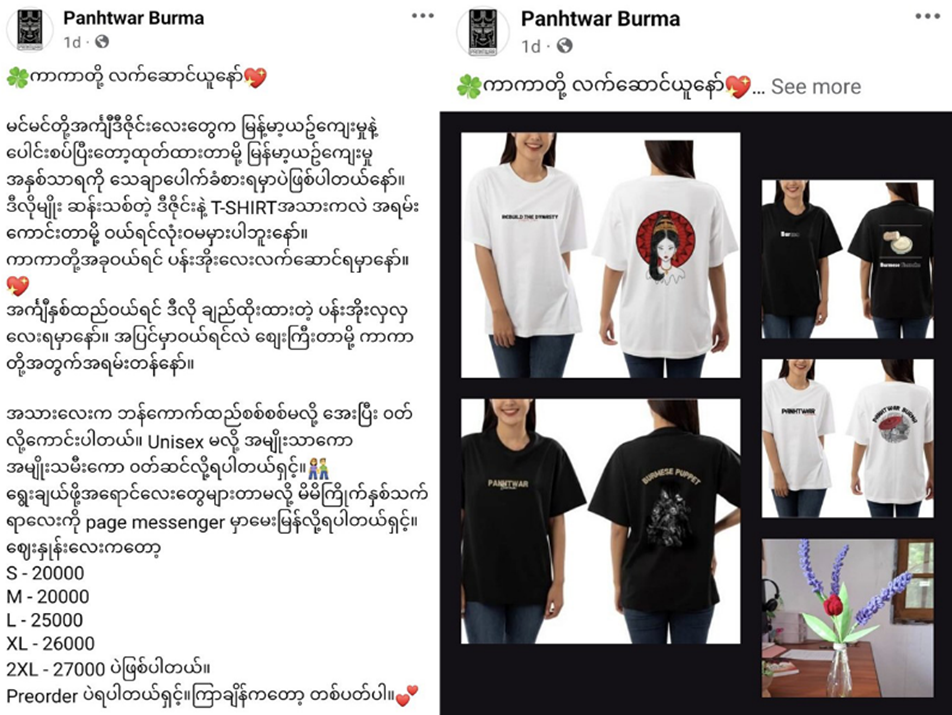
We use Facebook to advertise our customized T‑shirt printing brand in Myanmar, Figure(2.7). It’s a powerful tool that helps us reach a wider audience, connect with potential customers, and showcase our designs. Our goal is to make it easy for people to discover our brand, see what we offer, and interact with us. Word of mouth plays a crucial role in spreading the word about our brand. Satisfied customers often recommend us to their friends, family, and colleagues. We believe that great service, high‑quality products, and timely delivery encourage people to share their positive experiences with others.
When we think about the target audience, our main audience is teenagers. They love wearing custom T‑shirts that express their individuality, favorite designs, or interests. Whether it’s for school events, clubs, or just personal style, teens are always looking for unique and trendy designs.
We focus on creating T‑shirts that appeal to their sense of creativity and style. Social media helps us reach this younger crowd where they spend a lot of their time. Teens are also great at spreading the word through their friends, so word of mouth is powerful with this group too. By understanding what teenagers like and offering affordable, cool custom T‑shirts, we make sure they can find something that fits their style.
2.4 Analysis
2.4.1 Finance
Production
| T-shirt Production | Printing Cost (MMK) | Quantity | Delivery Cost | Total Cost (MMK) |
|---|---|---|---|---|
| First Phase Production | 18,000 | 9 | 4,000 | 166,000 |
| Second Phase Production | 20,500 | 4 | 4,000 | 86,000 |
| 24,500 | 2 | - | 49,000 | |
| Third Phase Production | 20,500 | 2 | 4,000 | 45,000 |
| Total Production Cost | 346,000 | |||
Income
| T-shirt Sale | Unit Price (MMK) | Quantity | Total (MMK) |
|---|---|---|---|
| First Phase Sale | 20,000 / 25,000 | 9 | 185,000 |
| Second Phase Sale | 27,000 | 6 | 162,000 |
| Third Phase Sale | 27,000 | 2 | 54,000 |
| Total Income | 401,000 | ||
| Net Profit | 55,000 | ||
Income from Commissions
| Youth Forum Day | 30,000 |
| Mascot Design | 500,000 |
| Total Commission Income | 530,000 |
| Total Profit | 585,000 |
As shown in the report figure(2.8), in the first phase of the T‑shirt production, we sent our designs to ‘Cowboy Printing Service’ and 9 T‑shirts were printed as an experimental batch. The cost per T‑shirt was 18,000 MMK, and the overall cost for producing 9 T‑shirts totaled 166,000 MMK, which includes a delivery fee of 4,000 MMK.
For the second production phase, we switched to a different printing service ‘The INK T‑Shirt Printing Service’, for better quality and more appealing designs. The second phase included 2 sizes, XL and 2XL, with costs of 20,500 MMK and 24,500 MMK per T‑shirt, respectively. We printed 4 XL and 2 2XL shirts amounting to a production cost of 135,000 MMK, which accounts for the 4,000 MMK delivery fee.
During the third phase, we remained with the same printing service. We also implemented a pre‑ordering system, which led to 2XL T‑shirts being pre‑ordered. The production cost for this was 45,000 MMK with the addition of the 4,000 MMK delivery fee. The capital for each phase amounted to 185,000 MMK, 162,000 MMK, and 54,000 MMK respectively. Across all three phases, the cost of production totaled up to 346,000 MMK, while the total income from the sales reached 401,000 MMK. This resulted in a net profit of 55,000 MMK from T‑shirt sales.
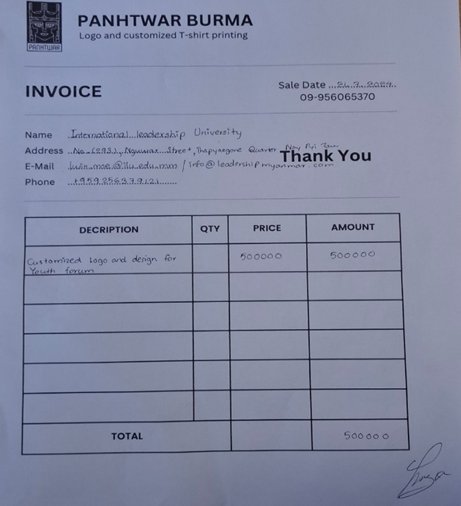
Additionally, we got commissioned to work on two design projects. The first commission involved designing various items distributed on Youth Forum Day which included logos, pens, books, T‑shirts, and bags. This brought in a commission fee of 500,000 MMK, Figure (2.9). The second commission was to design two logo designs with cultural and ethnic aesthetics, earning us a fee of 30,000 MMK. Overall, the net profit across the T‑shirt sales and commission fees was 585,000 MMK.
2.4.2. Post-Research Phase
Post-survey data was collected from customers who purchased our product. For this survey, we implemented purposeful sampling, as we only wanted to get data from our customers. The questionnaire comprised both quantitative and qualitative question types. The survey consisted of 6 items; 3 Closed questions, 2 Likert scale questions, and 1 Open question.
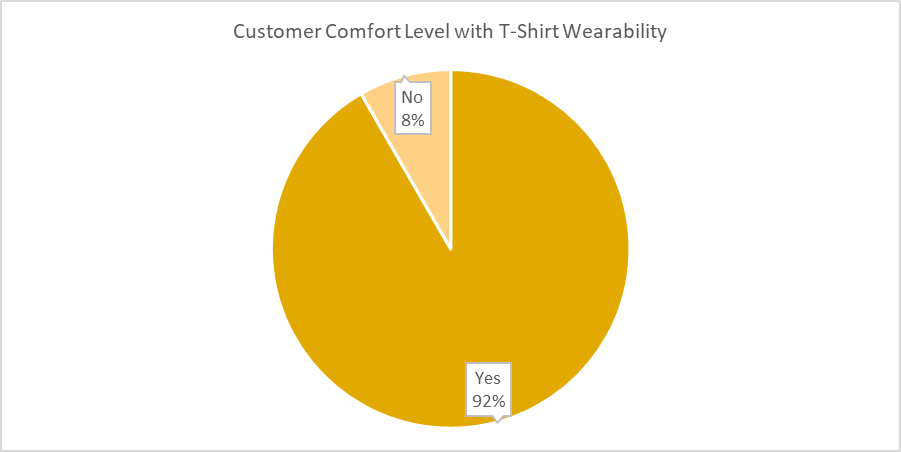
As shown by the results in Figure (2.10), the majority of our customers seem to be satisfied with the quality of our T-shirts. However, Figure (2.12) suggests that our customer service has fallen short of meeting expectations. Additionally, Figure (2.13) indicates that many customers are unhappy with our delivery and packaging services.
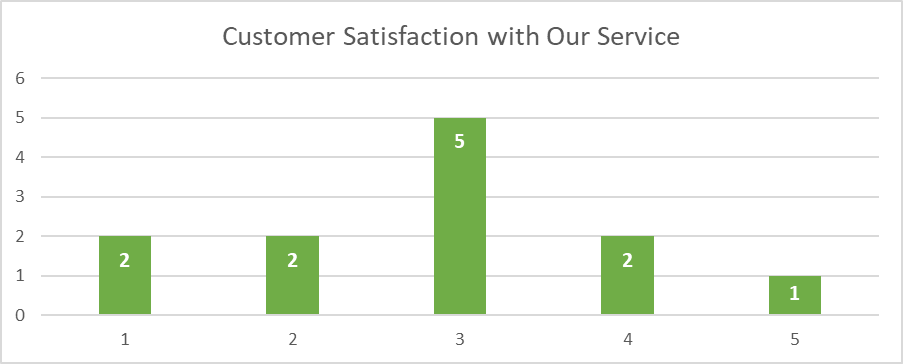
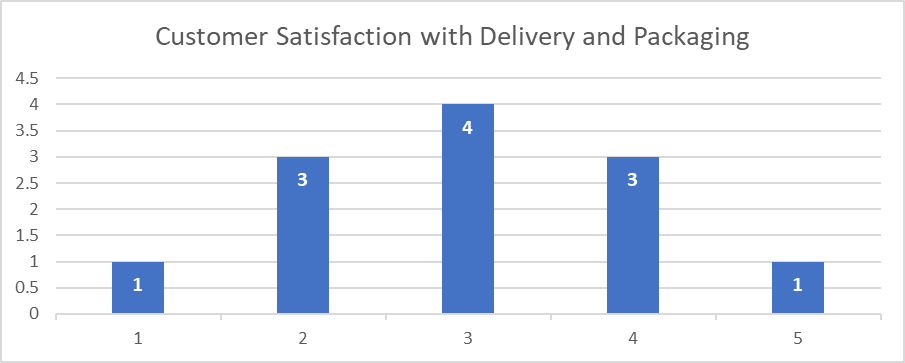
As stated above, while our customers seem to be pleased with our products, we should focus on improving our services. Although our services are not poor, directing our attention to enhancing the overall experiences for our customers is also crucial.
2.4.3. Challenges
Errors from the First Production Phase: During our initial production run, where we produced nine T-shirts, we first sent our designs via Viber. Unfortunately, the quality of our designs dropped considerably. We then switched to sending our designs through Telegram. However, since the backgrounds of our designs had not been removed, the printing service wasn’t able to extract the content correctly, leading to improper processing of our designs. As a result, some T-shirts had areas where the sticker was either partially printed or completely missing. Moreover, because we failed to properly research the return and refund policy of the printing service, we had to sell the shirts under the market price.
Solution with Professional Tools: To address these issues in our following production runs, we utilized professional design tools such as Adobe Photoshop and Illustrator to enhance the quality of our designs before sending them to the printing service.
Improvements Achieved Through Tool Implementation: After implementing digital tools like Photoshop and Illustrator, the quality of the products was expected to be improved, even if it were minor details such as designs with transparent backgrounds or mismatched colors between digital mockups and printed products.
2.4.4. SWOT Analysis for PANHTWAR Burma
Strengths:
- Creativity and Innovation: PANHTWAR Burma’s designs blend traditional Burmese culture with modern fashion trends, creating a unique and appealing style that stands out in the market.
- Brand Heritage: The name “PANHTWAR,” inspired by the brave and beautiful ancient Burmese queen, Queen Panhtwar, adds cultural significance and strengthens the brand’s identity.
- Client Loyalty: By offering customization, you can cater to personal preferences, encouraging repeat business and building strong client relationships.
Weaknesses:
- Resource-Intensive Customization: Customized T-shirt printing requires more time and resources, which could limit scalability and increase production costs.
- Market Saturation: The fashion and T-shirt printing industry is highly competitive, with many local and international brands offering similar products.
- Dependence on Client Preferences: Client-driven customization may create challenges in managing expectations and delivering on varied design requests.
- Inexperienced Take on Production: We faced some technicalities of the printing process due to the unfamiliarity of tools we used and relied on, and our foreign nature in the realm of business.
Opportunities:
- Strength in Community: Partnering with other Burmese or Southeast Asian brands can strengthen local networks and enhance visibility. By working together, brands can share resources and reach new customers through joint marketing efforts and events.
- Tapping into Digital Trends: The rise of online shopping presents an opportunity to expand the customer base through digital platforms. Establishing a strong online presence via an e-commerce site and leveraging social media marketing can help PANHTWAR Burma engage with a wider audience, both locally and regionally.
- Embracing Eco-Friendly Practices: As consumer interest in sustainable products grows, PANHTWAR Burma can differentiate itself by promoting environmentally responsible materials and ethical production processes. This approach can help build brand loyalty among consumers who prioritize sustainability in their purchasing decisions.
Threats:
- Freelance Market Pressure: The rise of freelance designers and smaller fashion start-ups offering affordable custom T-shirts could increase competition.
- Client Expectations: Managing client expectations, particularly for customized designs, could lead to dissatisfaction if not handled effectively.
- Legal Issues: As you expand your brand, intellectual property rights, trademarking, and other legal aspects could pose challenges.
Chapter 3
3.1 Conclusion
In the span of 3 months, we managed to achieve the scope of our industrial project, which is, as stated, the blend of modernism and tradition. ‘What is now proven was once imagined’, as it is written. We believe that appreciation of the old is only deriving the beauty of its content. We continue to stress upon this philosophy as it is the sole, if not the most, motivation behind our project.
From the financial standpoint, 585,000 MMK is reasonable within the framework of our scope. However, works count, as we take satisfaction from the fact that we got personally commissioned by the Rector and Tr. Su Lai Lai Naing.
Revisions only mean an extension of what is possible within these 3 months. In other words, what is our long‑term goal?
We would not limit our business to more than just a commission‑based service; rather, we would sell our logo design and T‑shirt production services to convenience stores and other retail partners. Additionally, we would invest in our online presence by creating our dedicated website that allows customers to design their customized products, including T‑shirts, hoodies, and more. This would inherently enable us to cater to a broader range of customer needs. Furthermore, a customer loyalty program could be implemented to reward our frequent buyers, offering benefits such as exclusive discounts, points for every purchase that can be redeemed for rewards, and early access to new products. To appeal to environmentally conscious consumers, we will adopt eco-friendly practices in our production process, such as using sustainable materials and inks. By prioritizing sustainability, we aim to reduce our environmental impact and attract customers who value responsible production.
In conclusion, building a successful customized logo design and T‑shirt printing business requires attention to detail, quality, and customer satisfaction. As customers, it is crucial to ensure that the suppliers we choose have a strong reputation in the market. Always take the time to read reviews, customer feedback, or testimonials from others who have worked with them. This will give us insight into our reliability and the quality of our service.
3.2 Recommendations
- It’s crucial not to become fixated on rigid expectations of how things will turn out. Achieving a clear vision requires striking a balance between flexibility and planning, as real-world limitations will undoubtedly influence the outcome.
- Effective teamwork is essential to any project. Establish clear roles and responsibilities, encourage open communication, and create an environment where all team members feel comfortable sharing their ideas.
- Before committing to a large order, it is highly recommended to request a sample. This helps verify the quality of materials, such as fabric or stickers, and ensures that the final product meets our expectations. Receiving a sample can help avoid potential issues and guarantees that the product is up to the standard you desire.
- Understanding the supplier’s return and refund policy is essential. Ensure the terms are clear in case products arrive damaged or do not meet expectations. A well-defined policy protects our investment and assures we have options if something goes wrong with our order.
- Conducting surveys: knowing what your targeted audience caters to is essential in navigating in the world of business. Gathering insights on consumer preferences can guide your product development and marketing strategies.
- Stay receptive to feedback and advice from those with more experience. View their insights not just as instructions but as opportunities for growth and improvement.